Truffles in Champagne: The Suez Canal Opening of 1869
Champagne and every variety of wine for thousands of European guests in 1869, on Egypt’s ruler, while Cairo homes drank Nile water and sherbet.
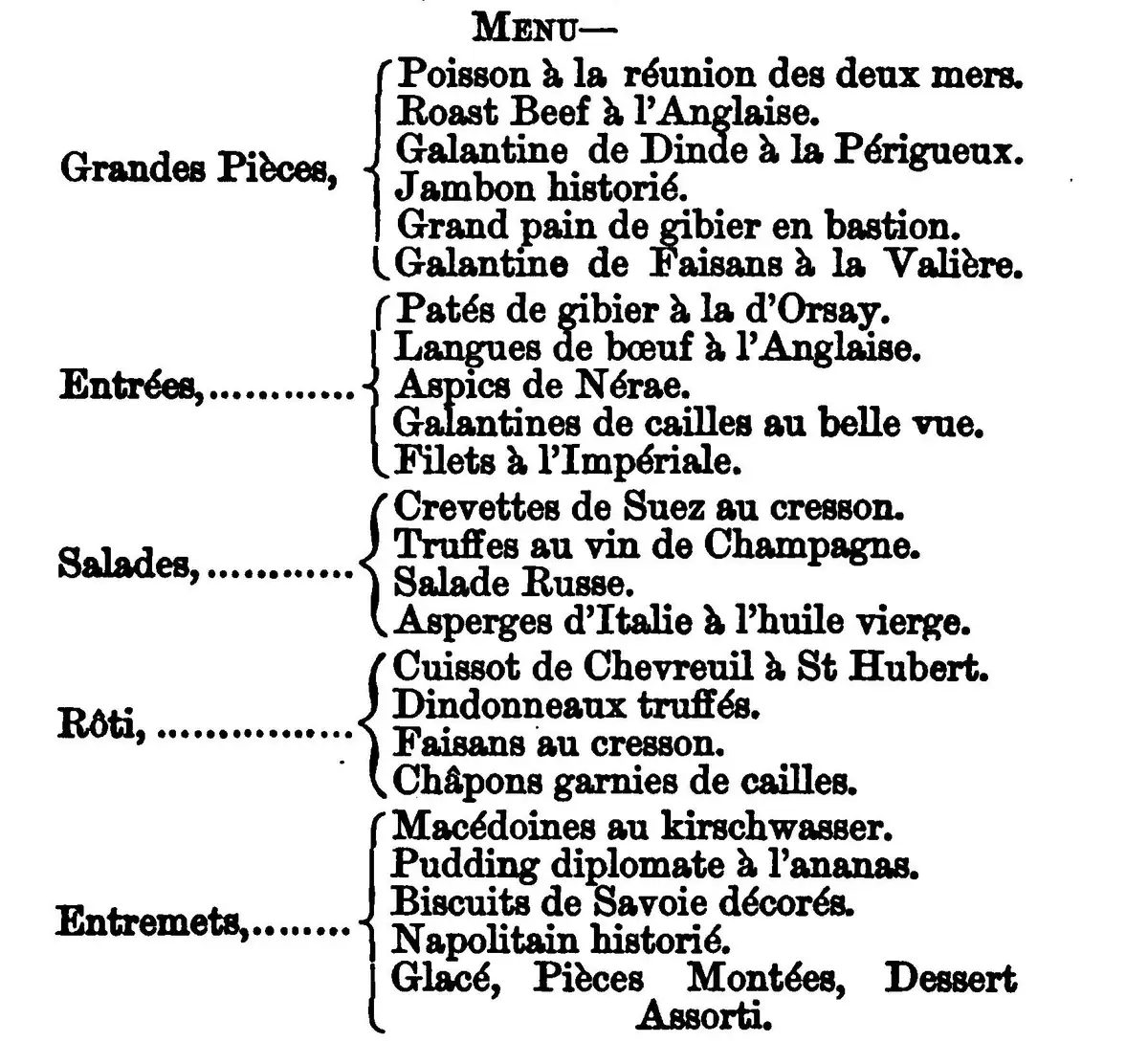
The guests at the opening of the Suez Canal in November 1869 drank French champagne and “every variety of wine,” poured for thousands of Europeans at the expense of Egypt’s ruler, the Khedive Ismail. The great supper at Ismailia even put champagne into the food, with truffles cooked in it, and kirsch into the fruit. Egyptian households of the time, by one English account of them, drank something else at their meals: Nile water and, in richer homes, sweet sherbets.
The canal opened on November 17, 1869, when a procession of ships left Port Said for the south. The parties ran for weeks around it, and the reporters who came to describe the engineering spent a good deal of ink on the catering.
Forty-eight shillings a head
The Khedive paid for all of it. Henry M. Stanley was in Egypt for the New York Herald, and he set out the arrangement: “Every hotel in Cairo was engaged to board and lodge the guests, to furnish them with champagnes and other wines at forty-eight shillings per diem per capita.”
Forty-eight shillings in 1869 is about £250 today, by UK consumer prices (Bank of England), for one guest’s board, bed and wine for one day. Stanley then did a sum of his own: “three thousand guests at forty-eight shillings per diem, will cost the Viceroy the round sum of £216,000,” or about £22 million today. The number of guests and the length of their stay are his assumptions, so the total is a reporter’s reckoning, not an account from the Khedive’s treasury. The daily rate is the part he reports as fact.
The parties had started before the canal opened. On the evening of November 15, at Port Said, “the Viceroy sent round to all the steamers in the harbour to invite all first-class passengers on board his yacht, the Maharousse, to a ball and supper. Over one thousand ladies and gentlemen availed themselves of the invitation. The ball lasted until two o’clock in the morning.”
The ball at Ismailia
The biggest night came the day after the opening. On November 18 the Khedive gave a ball at the Governor’s Palace in Ismailia, the canal’s new town, with the Empress Eugénie of France at his side. Alexander Russel of The Scotsman wrote it up in a letter dated the next day.
“The guests at the ball were at least three thousand,” he wrote, “and seldom, if ever, has so great a multitude been sumptuously entertained under one roof at one time.” The rooms were too full to dance much, and “a thousand persons sat down to supper, while at least as many more were promenading and partaking of refreshments at the buffets.” Three thousand is his estimate; nobody counted at the door.
The refreshment room, he noted, was “a very favourite resort.” “At the buffets, every conceivable kind of refreshment, liquid and solid, and all of the highest quality, was served out in boundless profusion. The supper, presided over by the Khédive, with the Empress by his side, was superb, both in show and in reality.” Then he printed the menu, the one at the top of this page.
It is entirely French. It opens with a fish “à la réunion des deux mers,” for the joining of the two seas, and has local shrimps, “Crevettes de Suez au cresson,” among the salads. Champagne appears in the food rather than in a wine list: “Truffes au vin de Champagne,” truffles cooked in champagne. Among the sweets are “Macédoines au kirschwasser,” mixed fruit in cherry brandy. Russel didn’t list the wines. He summed them up in one line under the menu: “All these good things, with every variety of wine, were served to a thousand persons in superabundance, comfort, and elegance.”
So the opening’s own drink is a phrase, not a recipe. No account we found names a cocktail, a punch or a toast made for the canal, and the supper menu names no wine at all.
Europe in Egypt
Edward Dicey of the Daily Telegraph went to a ball at the Boulak Palace in Cairo later that month, and found the same thing. While the Khedive entertained his European guests, Dicey wrote, his one ambition was “to reproduce Europe in Egypt.” Of the supper he wrote that it “might have been furnished by Chevet or Gunter,” the caterers of Paris and London.
The wine went upriver too. After the opening the Khedive sent many of his guests on a trip up the Nile, and at a lunch at Abydos, Stanley wrote, “in flowing glasses of Montrachet, Chablis, Haut Sauterne, and Champagne we drank to the ‘requiescat in pace’ of the great Rameses.” Those are the only wines named in the accounts here, and they were poured weeks after the opening, not at it.
English beer for choice
Port Said, at the canal’s northern end, was a canal workers’ town full of people of many nations. Russel found its street life a show in itself: the crowd “sitting drinking various liquors (English beer for choice) before the door of whichever hotel happens to have its front in shade at the particular hour, is a sight worth seeing.”
Not every visitor was impressed by the fuss. Russel reported Americans pointing out that “they had opened the Great Pacific Railway (1700 miles long) without any more ceremony than driving a gold spike and drinking a fair allowance of champagne.” That had been in May the same year.
Water and sherbet
None of this was how Egyptians drank at home, and the people who ate at the Khedive’s tables were mostly European. For the other side there is Edward William Lane’s Manners and Customs of the Modern Egyptians, written from his years in Cairo between 1825 and 1835 and in its fifth edition by 1860. It describes the city a generation before the canal, so it is a picture of habits, not of the 1869 parties.
“The only beverage at meals is water of the Nile,” Lane wrote, “or, sometimes, at the tables of the rich, sherbet.” He also described, from a friend’s account, the wine some Muslims drank before supper, adding that he never drank wine himself and so was never invited. In wealthy houses the meal could end with “khusháf,” “a sweet drink, commonly consisting of water with raisins boiled in it, and then sugar: when cool, a little rose-water is dropped into it.”
The sherbets came in several kinds. “The most common kind is merely sugar and water, but very sweet: lemonade is another: a third kind, the most esteemed, is prepared from a hard conserve of violets, made by pounding violet-flowers, and then boiling them with sugar: this violet-sherbet is of a green colour.” There were sherbets of mulberries and of sorrel, and in the streets one “made with raisins,” “a strong infusion of licorice-root,” and one from the fruit of the locust tree, the carob.
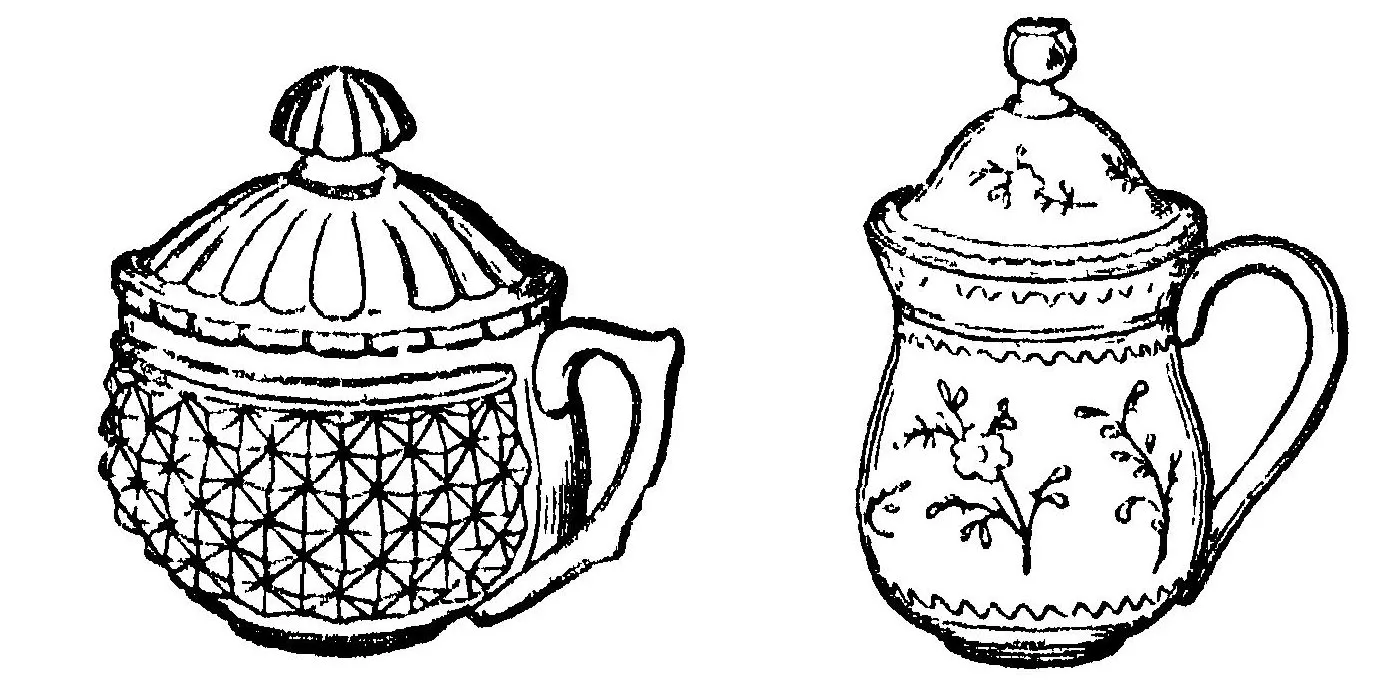 Sherbet cups, from Edward William Lane, Manners and Customs of the Modern Egyptians, 5th ed. (London, 1860), p. 150.
They were served with ceremony. “The sherbet is served in covered glass cups, generally called ‘kullehs,’ containing about three-quarters of a pint,” Lane wrote, and his woodcut shows two of them. Our Persian Sherbet comes from a different country and a later book, but it is the same idea: fruit, sugar and flower water, long and cold. Lemonade’s longer history, from Paris to Gettysburg, is told in A Short History of Lemonade.
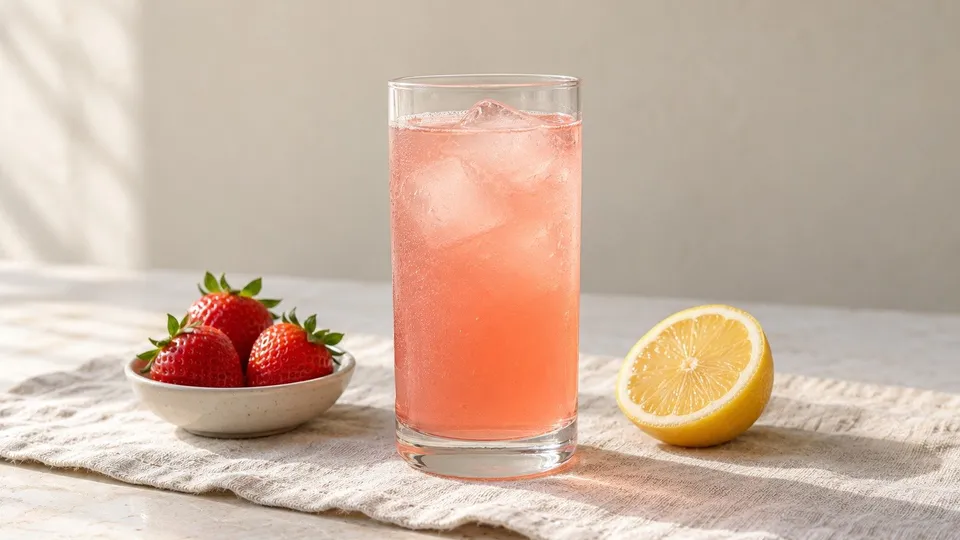 Always alcohol-freePersian Sherbet, Strawberry, Lemon and Orange-Flower Water from 1924
A glass for November 17
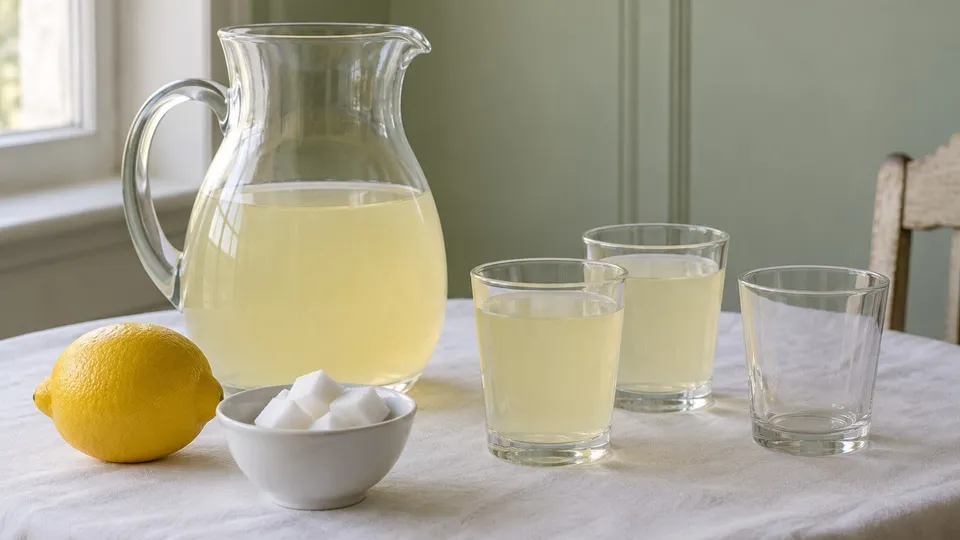
Make the Champagne Cobbler, because it is the champagne drink of the same decade, printed in New York in 1862: a bottle shared four ways over shaved ice with sugar and orange and lemon peel, ready in ten minutes. For a glass without alcohol, Mrs. Beeton’s Lemonade of 1861 is much the same drink as one of the sherbets Lane lists: lemon, sugar and water.
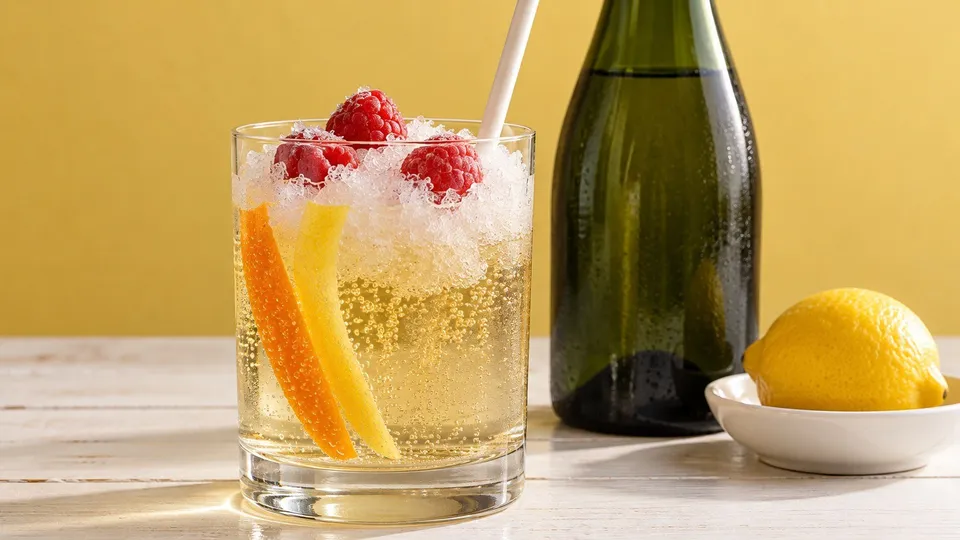 Make it todayChampagne Cobbler, a Bottle to Four Glasses
 Always alcohol-freeMrs. Beeton’s Lemonade, Made with Boiling Water
For what was on the plate, our sister site The Forgotten Menu has the menu of the Suez Canal opening supper (opens in a new tab).
Sources
- [Alexander Russel], Egypt: The Opening of the Great Canal (Edinburgh: printed at the “Scotsman” Office, 1869), pp. 54–55 and 77–79, letters first printed in The Scotsman, November and December 1869. Bodleian Library copy, Internet Archive.
- Henry M. Stanley, My Early Travels and Adventures in America and Asia, vol. 2 (London: Sampson Low, Marston, 1895), pp. 36, 45 and 99, his 1869 letters to the New York Herald. Internet Archive.
- Edward Dicey, The Morning Land, vol. 1 (London: Macmillan, 1870), p. 189, “The Fêtes at Cairo.” Internet Archive.
- Edward William Lane, An Account of the Manners and Customs of the Modern Egyptians, 5th ed., ed. Edward Stanley Poole (London: John Murray, 1860), pp. 147 and 150–151. Internet Archive.