What Did People Drink in Old Singapore?
Coffee at four cents a cup over condensed milk, the gin sling at the clubs long before the Raffles legend, and barley water from Government House.
Most people in old Singapore drank coffee. In the 1930s a cup in a coffee shop cost four cents, black and strong, poured over a spoonful of condensed milk that the drinker stirred in. At the hotel bars and the clubs, the drink Singapore became known for was the gin sling, on an ordinary bar card by 1907, long before anyone said it was invented at Raffles Hotel. And for the heat there were soda water from the town’s own factories, lemon squash and barley water.
Four cents a cup
“As the public house bar is to the British working man,” a writer in the Sunday Tribune began in September 1933, “so is the coffee shop” to Singapore’s working people of every community. Some shops were run by Indians and many by Chinese, with marble-topped tables, and some sold biscuits or toast. Coffee with milk was “four cents a cup,” about 30p today, and without milk “two cents cheaper.” (We convert the Straits dollar, and the Malayan dollar that replaced it in 1939, at their fixed rate of 2s 4d sterling, by UK consumer prices from the Bank of England.)
The customers were exacting. “So long as it is black, the coffee is good. Pale coffee, even though it be made of the best beans obtainable, they will reject with scorn.” The milk was sweetened condensed milk, and “The milk must be on the spoon at the bottom of the cup when it is given to them,” so that each drinker could stir the “jet-black liquid” slowly until it turned “a lighter brown colour.” We make that cup as Coffee-Shop Kopi with Condensed Milk.
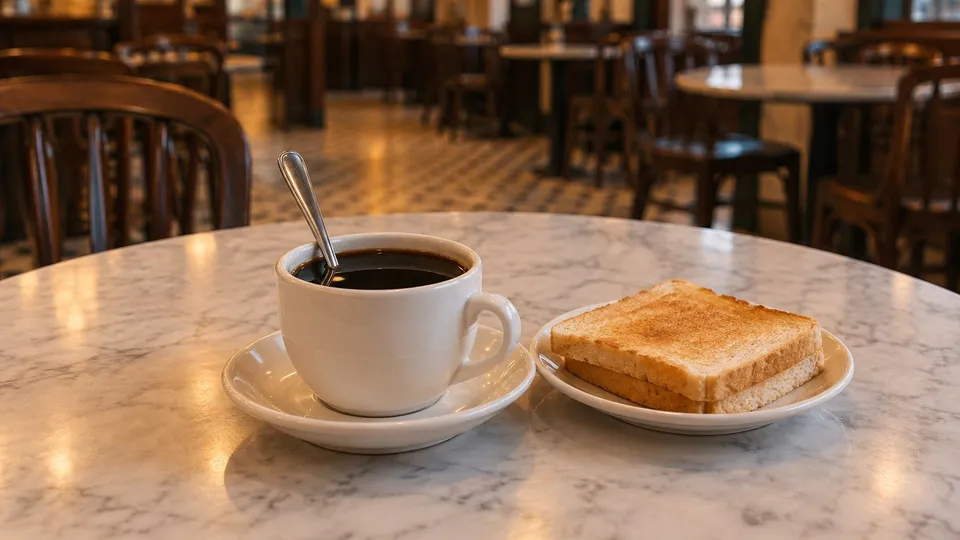 Always alcohol-freeCoffee-Shop Kopi with Condensed Milk, Singapore 1933
The beans came from the region. William Ukers’s All About Coffee (1922) says Liberica was “mostly favored” in the Federated Malay States, and that Singapore was a clearing center for coffee from the neighboring islands, importing nearly 26 million pounds in 1920 and sending out a little more. After the war the shops multiplied: in 1950 the Malaya Tribune said they had “sprung up like mushrooms since the liberation,” with tea or coffee at 10 cents a cup plain and 15 with milk, about 35p and 50p today. The words kopi-o and teh tarik, the sock-like cloth filter and the beans roasted with sugar and butter belong to the later coffee shop; we have not found them in print before the 1940s. Bandung, rose syrup with milk, is a real coffee-shop drink too, but the earliest print mention we have found is from 1978, and none of the stories about its name can be proved yet.
The gin sling, before Raffles
In March 1907 the Recreation Hotel’s tariff card in the Eastern Daily Mail listed “Gin Sling (with soda)” at 50 cents a glass, about £6 today, and “Gin Sling (with water)” at 25, about £3, beside lemon squash at 20 and tea or coffee at 10, about £1.20. The sling with soda cost five times a cup of tea or coffee on the same card. Two years later a reader in Penang asked the Pinang Gazette how to make “claret cup, gin sling, and hock cup,” because the English books named ingredients that “cannot be procured in the tropics.”
By 1913 the Straits Times could write that “the dominion of the gin-sling, as an undisputed favourite, begins and ends with the boundaries of Malaya.” It was a morning drink: newcomers who asked for one “at an hour that is usually sacred to the stengah,” the whisky and soda, were laughed at. That August the Singapore Cricket Club was teased for not serving it, and a month later the Weekly Sun reported that two members had walked in and ordered “one Cherry Brandy, one Domb, one Gin, one Lime Juice, some Ice and water, a few dashes of Bitters—and then enjoyed a really decent Sling.” “Domb” is D.O.M., Bénédictine. It is the earliest Singapore recipe for the drink we have found, and we make it as the Cricket Club Gin Sling of 1913.
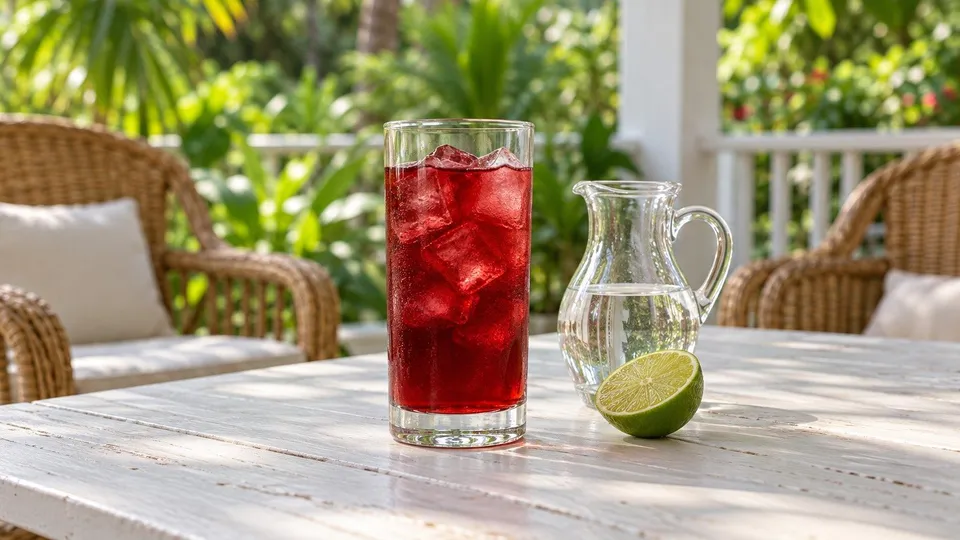 Make it todayThe Cricket Club Gin Sling, Singapore 1913
The old gin sling it grew from was much plainer. Jerry Thomas’s New York bar book of 1862 makes it like a gin toddy, gin, sugar, water and ice, “except you grate a little nutmeg on top.” The Singapore drink added cherry brandy, Bénédictine, lime and bitters. In 1927 a Captain Murphy wrote to the Malaya Tribune remembering his first “Straits Sling” in Kuala Lumpur in 1910, made with Geneva gin from “a black square bottle,” cherry brandy, lime, sugar, crushed ice and soda: “It was a dark red when finished and a drink for the gods.” That is a memory written seventeen years later.
London printed it in 1922. Robert Vermeire’s Cocktails: How to Mix Them called the “Straits Sling” a “well-known Singapore drink,” with gin, Bénédictine, cherry brandy, lemon, bitters and soda. Harry Craddock’s Savoy Cocktail Book of 1930 has both a Straits Sling and a simpler “Singapore Sling” on the same page.
The hotel story came later. In the papers we have searched from 1907 to 1940, no item names Raffles Hotel or a Raffles bartender as the inventor. The hotel’s own tradition gives the drink to its barman Ngiam Tong Boon around 1915; we have found no period source for it. In 1936 a special correspondent of the Hongkong Telegraph wrote that Singapore was “famous for its gin sling—especially the Raffles formula,” but called the idea that the formula was a closely guarded secret “pure mythological nonsense,” and said the gin sling was “not nearly as popular as the ‘stengah’.” How spirits came into the mixed drink in the first place is in From Punch Bowl to Shaker.
Soda water and barley water
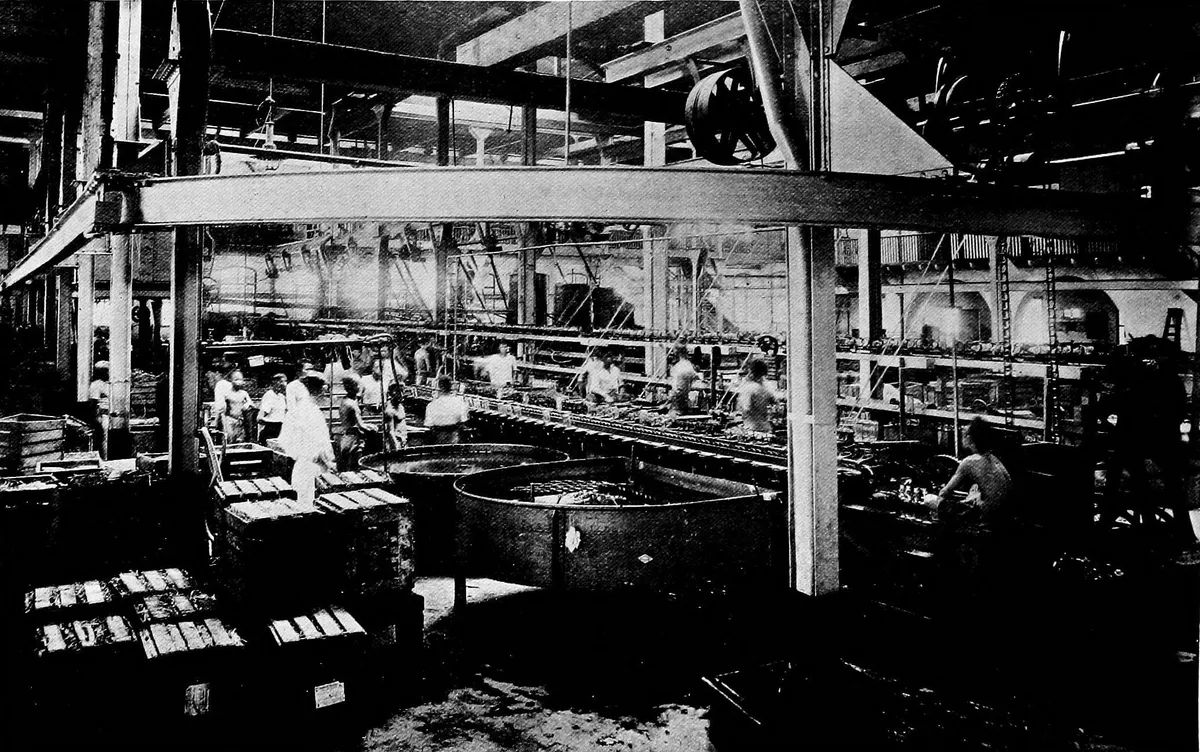
The sling needed soda, and Singapore made its own. In 1908 Twentieth Century Impressions of British Malaya reported that Fraser & Neave’s “great speciality is soda-water, the output of which has been increased ten-fold since the firm started,” supplying the mail steamers and “the principal hotels and clubs in Singapore and the Straits generally.” Their factory hall is the picture at the top of this page.
Barley water came from the top. In June 1898 the Straits Times reported that the acting governor, Sir Alexander Swettenham, had “introduced the cult of barley water into Singapore,” and that it was “on tap at Government House.” In December 1915 the Singapore Free Press printed “Hot Weather Beverages” from “an old book of the early days of Queen Victoria’s reign”: rice water, barley water sweetened with “crushed sugar candy,” and a pineapple cup. For a plain lemon barley water, make Beeton’s 1906 Barley Water. Our alcohol-free drink from that column is Pineapple Cup with Rock Sugar, made with soda water, or hot, as the paper suggests.
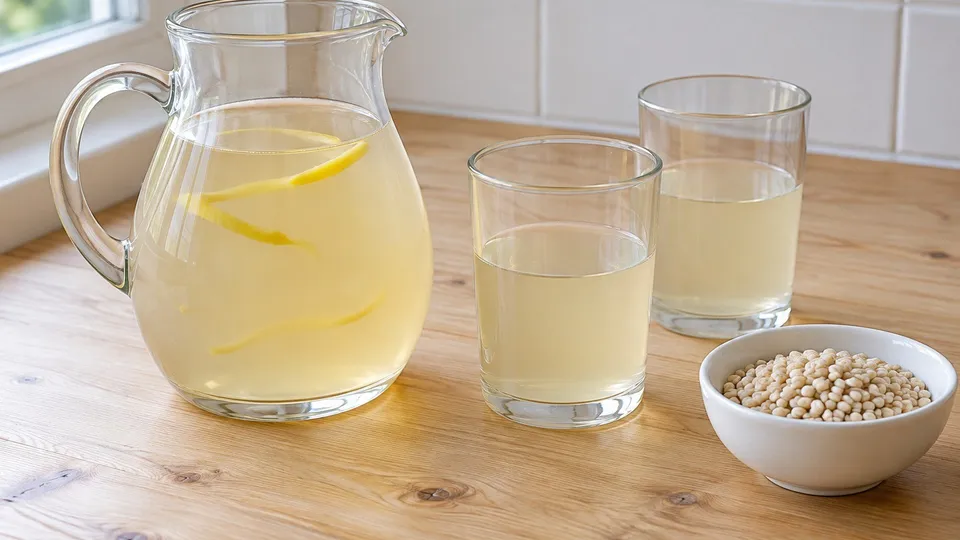 Always alcohol-freeBeeton’s 1906 Barley Water with Lemon Peel
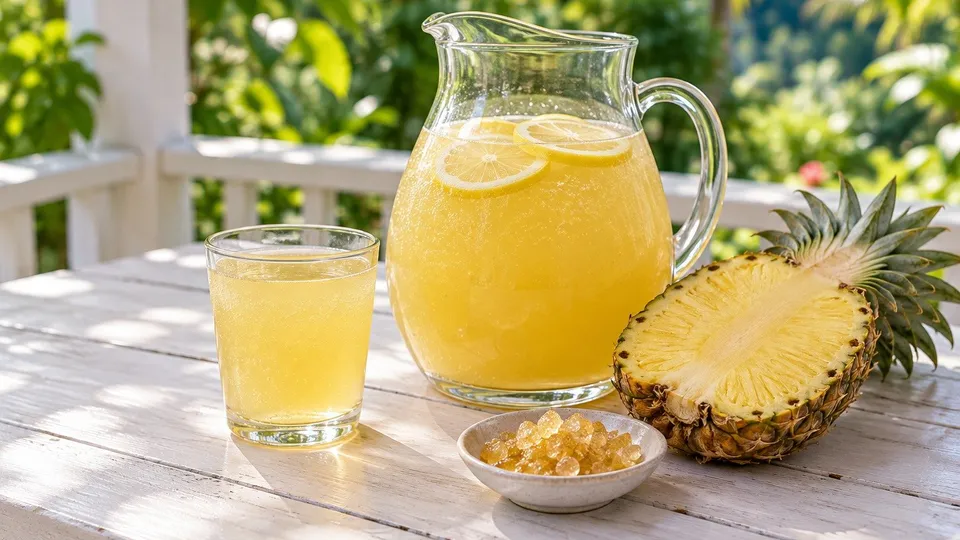 Always alcohol-freePineapple Cup with Rock Sugar, Singapore 1915
Sources
- “One of Singapore’s Coffee Shops,” Sunday Tribune (Singapore), September 3, 1933, p. 10. NewspaperSG, National Library Board.
- “Malaya’s Public Story Rooms,” Malaya Tribune, June 20, 1950, p. 4. NewspaperSG.
- William H. Ukers, All About Coffee (New York: Tea and Coffee Trade Journal Co., 1922), pp. 238, 283–284.
- “Recreation Hotel. Revised Tariff Card,” Eastern Daily Mail, March 25, 1907, p. 5. NewspaperSG.
- “Recipes Required,” Pinang Gazette, February 20, 1909, p. 5. NewspaperSG.
- “The Gin-Sling Question,” Straits Times, August 20, 1913, reprinted in the Pinang Gazette, August 22, 1913, p. 4. NewspaperSG.
- “More About Gin Slings,” Weekly Sun, September 20, 1913, p. 7. NewspaperSG.
- “The Straits Sling,” letter from Capt. E. R. Murphy, Malaya Tribune, August 31, 1927, p. 7. NewspaperSG.
- Jerry Thomas, How to Mix Drinks, or the Bon-Vivant’s Companion (New York: Dick & Fitzgerald, 1862), p. 58.
- Robert Vermeire, Cocktails: How to Mix Them (London: Herbert Jenkins, 1922), p. 84.
- Harry Craddock, The Savoy Cocktail Book (London: Constable, 1930), p. 190.
- “By a Special Representative,” Hongkong Telegraph, October 13, 1936, p. 7.
- Twentieth Century Impressions of British Malaya (London: Lloyd’s Greater Britain Publishing Co., 1908), p. 644.
- “On the Verandah,” Straits Times, June 18, 1898. NewspaperSG.
- “Hot Weather Beverages,” Singapore Free Press, December 29, 1915, p. 5. NewspaperSG.